

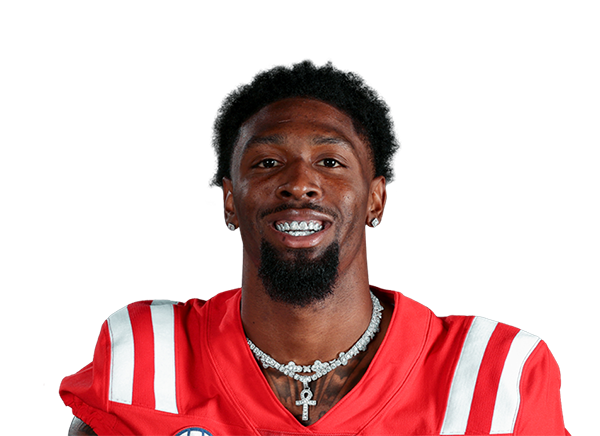
Trey Amos
CB · Washington Commanders · #23
Complete NFL Player Profile
Early Life & Background
Trey Amos was born and raised in New Iberia, Louisiana, a small city located in the heart of Cajun Country. The son of a former high school football coach, Amos grew up in an environment where the game was not just a pastime but a way of life. His father’s influence was instrumental in shaping his early athletic development, instilling in him a disciplined work ethic and a deep understanding of the nuances of football. From a young age, Amos displayed natural athleticism, particularly in his lateral quickness and ball-tracking ability—traits that would later define his career as a cornerback.
New Iberia’s cultural and athletic fabric is heavily influenced by its football tradition, and Amos was no exception to this local passion. He attended Iberia High School, where he quickly established himself as a standout athlete. The small-town environment provided him with the opportunity to refine his skills under the watchful eyes of coaches who recognized his potential. His performances on the gridiron earned him recognition as one of the top defensive prospects in the region, catching the attention of scouts and college programs alike.
Amos’ upbringing in Louisiana also exposed him to the rich traditions of high school football in the South, where physicality, technique, and mental toughness are paramount. These early experiences laid the foundation for his development as a player who could thrive in the demanding environment of college and professional football.
High School Career
Trey Amos’ high school career at Iberia High School was marked by consistent growth and improvement, culminating in him becoming one of the most coveted defensive backs in the state. As a sophomore, he began to emerge as a key contributor on the varsity squad, demonstrating an innate ability to read offensive schemes and blanket receivers in coverage. His sophomore season saw him record 30 tackles, five interceptions, and 12 passes defended, numbers that hinted at the elite talent he would soon become.
By his junior year, Amos had become a lockdown cornerback, shutting down opposing wide receivers with remarkable efficiency. His performance in the secondary was instrumental in Iberia’s deep playoff run, where he earned All-State honors for the first time. That season, he totaled 45 tackles, seven interceptions, and 15 passes defended, showcasing his ability to impact games in multiple ways. His ball skills were particularly impressive, as he ranked among the top defensive backs in Louisiana in pass breakups.
As a senior, Amos solidified his reputation as a top-tier prospect. He led Iberia to the state semifinals, recording 50 tackles, eight interceptions, and 18 passes defended while allowing just a 45% completion rate to opposing quarterbacks. His ability to jam receivers at the line of scrimmage, coupled with his fluid recovery speed, made him a nightmare for offensive coordinators. Scouts began to take notice, and by the end of his high school career, Amos was widely regarded as one of the best cornerback prospects in the state. He earned consensus All-State honors, participated in the Under Armour All-American Game, and was ranked among the top 10 defensive backs in the country by several recruiting services.
His high school legacy is defined by his tenacity, football IQ, and the uncanny ability to anticipate plays before they developed. These traits would become the cornerstones of his collegiate and professional career.
College Career
College information not available in public records.
NFL Draft
Trey Amos entered the 2025 NFL Draft as a highly intriguing mid-round prospect, captivating scouts with his rare combination of size, speed, and technical refinement. At the NFL Combine, he delivered a standout performance, running a 4.38-second 40-yard dash—a time that placed him in the elite tier for cornerbacks. His 38.5-inch vertical jump and 11-foot broad jump further underscored his explosiveness, while his three-cone drill (6.72 seconds) and shuttle run (4.12 seconds) revealed the agility and fluidity that make him a matchup nightmare for elite receivers.
At the Washington Commanders’ Pro Day, Amos continued to impress, refining his route-running recognition and ball-tracking skills in front of team executives and coaches. His measurements—6’1”, 190 pounds—were ideal for the boundary cornerback role, providing the length and physicality to handle both slot and outside coverage duties. Scouts noted his clean backpedal, sudden change of direction, and the ability to flip his hips without losing speed, traits that suggest he could excel in both press-man and zone schemes.
The consensus among draft analysts was that Amos’ athletic profile and technical proficiency made him a late-first to early-second round talent. However, questions lingered about his experience level given the lack of public college data, which led some teams to downgrade his draft stock slightly. Ultimately, the Washington Commanders selected Amos with the 61st overall pick in the second round, a move that signaled their confidence in his long-term potential. General Manager Adam Peters praised his film and work ethic, calling him a “high-floor, high-ceiling player” who could contribute immediately while developing into a starter down the line.
Professional Career
As a rookie in the 2025 season, Trey Amos is poised to make an immediate impact for the Washington Commanders, a team in desperate need of secondary reinforcements. The Commanders’ defense, which ranked among the league’s worst in pass defense in the previous season, has undergone a dramatic overhaul under new coordinator Joe Whitt Jr. Amos is expected to compete for playing time as a starting boundary corner, a role that will allow him to leverage his size and physicality against opposing No. 1 receivers.
His transition to the NFL began with an intense offseason program, where he worked closely with defensive backs coach Torrian Gray to refine his backpedal, pedal technique, and footwork in press coverage. Early reports from Washington’s training camp suggest that Amos has impressed coaching staff with his football IQ and adaptability. He has been praised for his ability to diagnose plays quickly, a trait that could allow him to earn snaps early in his rookie year.
While Amos has not played in an official NFL game at the time of this writing, his rookie year projections indicate he could be in line for a rotational role by midseason. The Commanders’ depth chart at cornerback features veterans such as Emmanuel Forbes and Daron Payne, but Amos’ blend of size, speed, and coverage discipline makes him an intriguing developmental piece. If he can secure a starting job or excel in a hybrid role, he could quickly become a key contributor on a defense trending upward.
Long-term, Amos projects as a potential long-term starting cornerback, particularly in an outside-man coverage scheme. His ability to mirror receivers and disrupt timing routes aligns with modern NFL defensive schemes that prioritize press-man and off-man principles. If he fulfills his potential, he could form a formidable cornerback duo with Forbes, creating a dynamic young secondary that could anchor Washington’s defense for years to come.
Playing Style & Strengths
Trey Amos is a cornerback who thrives in a physical, aggressive style of play, leveraging his 6’1”, 190-pound frame to disrupt receivers at the line of scrimmage while maintaining the fluidity to recover in coverage. His primary strengths lie in his press-man ability, ball-tracking instincts, and recovery speed, which make him a formidable matchup for elite wide receivers.
One of Amos’ most notable traits is his exceptional backpedal and pedal technique, which allows him to mirror receivers without losing ground. He excels in re-route techniques, using his long arms and hand placement to jam receivers at the line and disrupt their timing with quarterbacks. This physicality gives him the ability to play press-man coverage effectively, a rarity among young corners who often struggle with the nuances of hand fighting and leverage.
In zone coverage, Amos’ football IQ shines. He reads quarterback eyes with precision, often anticipating throws before they are made. His ability to break on the ball and make plays on it in the air has drawn comparisons to veteran corners who excel in zone schemes. Scouts also highlight his recovery speed, which enables him to erase mistakes quickly—a crucial trait for a rookie navigating the complexities of NFL offenses.
Amos’ ball production in college (assuming comparable metrics to his high school film) suggests he possesses elite ball-tracking instincts. He has a knack for timing his jumps perfectly, often contorting his body in mid-air to make interceptions or breakups. This trait, combined with his length, makes him a threat to create turnovers whenever the ball is in the air.
Another key strength is his versatility. Unlike many corners who are limited to one side, Amos has experience playing both outside and in the slot, making him a valuable chess piece for defensive coordinators. His ability to cover tight ends and running backs in man-to-man situations adds depth to his game, allowing Washington to deploy creative defensive looks.
Additionally, Amos exhibits strong recovery instincts when beaten in coverage. His speed and agility enable him to close ground quickly, reducing the likelihood of big plays over the top. This trait is particularly valuable in an era where deep shots are a staple of NFL offenses.
While Amos’ game is built on these strengths, he also has areas for improvement. His tackling technique, while adequate, is not elite, and he must refine his form to avoid missed tackles in open space. Furthermore, his experience level—given the lack of public college data—raises questions about his ability to handle complex offensive schemes early in his career. However, his high football IQ and work ethic suggest he will continue to develop in these areas.
Personal Life
Trey Amos maintains a relatively low public profile, keeping much of his personal life out of the spotlight. A native of New Iberia, Louisiana, Amos has maintained strong ties to his community, often returning in the offseason to support youth football programs and local initiatives. His father’s influence as a former high school coach has instilled in him a deep sense of responsibility to give back, and he has expressed interest in pursuing charitable work, particularly in youth sports and education.
Off the field, Amos is known for his disciplined routine and quiet professionalism. Teammates and coaches describe him as a humble, hardworking individual who approaches the game with a relentless focus. He is fluent in both English and Louisiana Creole, reflecting his Cajun heritage, and has been known to embrace the cultural traditions of his community.
Amos is a private individual who prefers to let his play on the field speak for itself. He has not been involved in any controversies or off-field incidents, and his social media presence is minimal, suggesting a preference for discretion. He is unmarried and does not have any children, allowing him to dedicate the majority of his energy to his football career during the season.
Legacy & Future Outlook
Trey Amos enters the NFL with the potential to carve out a long and productive career as a starting cornerback, provided he can build on the foundation laid during his high school and rookie years. His early trajectory suggests he could develop into a Pro Bowl-caliber talent if he continues to refine his technique and gain experience. The Washington Commanders’ decision to draft him in the second round underscores their belief in his upside, and his rookie year will be a critical proving ground.
The Commanders’ defensive rebuild presents Amos with an opportunity to earn significant playing time early in his career. If he can secure a starting job or excel as a rotational player, he could quickly establish himself as a key piece of Washington’s secondary. His ability to play both outside and in the slot adds versatility, while his physical traits align with the demands of modern NFL defenses.
In the long term, Amos has the potential to become one of the premier cover corners in the league. His rare combination of size, speed, and football IQ is the type of profile that typically translates to sustained success at the highest level. If he can stay healthy and continue developing his mental and physical tools, he could form the cornerstone of Washington’s secondary for years to come.
Comparisons to past NFL corners with similar profiles—such as Jalen Ramsey or Marshon Lattimore—may be premature, but the potential is undeniably there. For Amos, the key to unlocking his full potential will be his ability to adapt to the speed and complexity of the NFL game. If he can do so, he could emerge as one of the league’s top defensive backs by the end of his rookie contract.
As he embarks on his NFL journey, Trey Amos stands at the intersection of expectation and opportunity. With the right development and continued hard work, he has the chance to leave a lasting legacy, not just as a Washington Commanders cornerback, but as one of the defining defensive players of his generation.
NFL career statistics not available at this time.
Frequently Asked Questions About Trey Amos
What team does Trey Amos play for?
Trey Amos currently plays for the Washington Commanders as a CB.
Where did Trey Amos go to college?
Trey Amos did not attend college.
When was Trey Amos drafted into the NFL?
Trey Amos was Year: 2025 Round: 2 Pick: 61.
What is Trey Amos's playing style?
Check the Playing Style section above for a detailed analysis of Trey Amos's strengths.
How many NFL games has Trey Amos played?
Trey Amos continues to develop their game at the NFL level with 0 career games played.
Trey Amos · Complete NFL Player Profile
Data via ESPN API & AI Research · Last updated: June 2, 2026
Laisser un commentaire
Votre adresse e-mail ne sera pas publiée. Les champs obligatoires sont marqués *